Cottagecore Elderly Woman Clipart: Warmth, Authenticity, and Smart Creative Choices
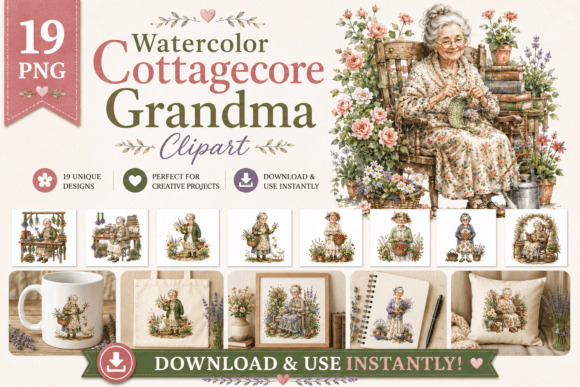
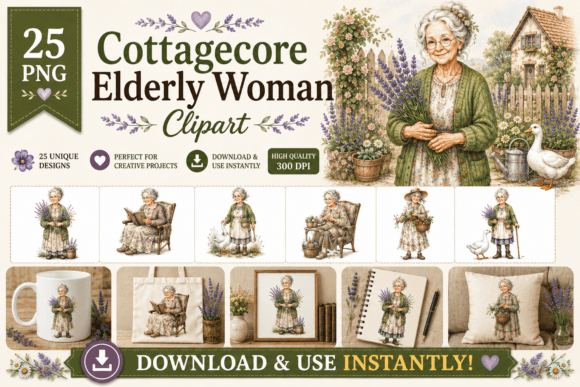
There’s a quiet magic in cottagecore — not just as an aesthetic, but as a feeling: soft light through lace curtains, the scent of dried lavender, hands in soil, stories passed down over tea. Cottagecore Elderly Woman Clipart captures that essence beautifully, especially when rendered with care — like hand-painted watercolor textures, gentle brushstrokes, and intentional details that honor age, wisdom, and rural grace. These aren’t generic silhouettes or AI-generated approximations. They’re thoughtful illustrations of grandmothers tending geese, reading under apple trees, or carrying woven baskets brimming with wildflowers — each one radiating calm, dignity, and timeless charm.
Why This Style Resonates — And Why It’s Easy to Get Wrong
Many creators seek Cottagecore Elderly Woman Clipart for greeting cards, farmhouse wall art, or print-on-demand mugs — hoping to evoke nostalgia, comfort, or intergenerational warmth. But here’s what often goes overlooked: not all “cottagecore” clipart delivers the same emotional resonance. Some bundles use flat vector shapes with no texture, others rely on stiff, overly symmetrical poses that feel more like stock photos than soulful storytelling. Worse, some sellers label low-resolution or non-transparent PNGs as “print-ready,” only for you to discover blurry edges or white halos around figures when layered on kraft paper or linen backgrounds.
This misalignment affects more than aesthetics. A poorly chosen illustration can weaken your brand’s authenticity — especially if you’re building a cottagecore-themed small business, blog, or Etsy shop. Customers drawn to this aesthetic value intentionality. They notice when a grandmother’s apron lacks stitching detail, or when her posture feels posed rather than lived-in. Subtle disconnects like these quietly erode trust and reduce engagement, whether you’re designing a planner cover or a limited-edition journal kit.
1. Assuming “Watercolor Style” Means Actual Texture
“Watercolor style” is often used loosely — sometimes just meaning soft edges or muted palettes. But true watercolor clipart should show organic pigment bleed, subtle granulation, and gentle paper texture beneath the paint. If the bundle doesn’t include close-up previews (especially of skin tones or fabric folds), ask yourself: does this look like it was painted — or digitally mimicked? The Watercolor Cottagecore Elderly Woman Clipart Bundle includes 25 high-resolution (300 DPI), hand-painted-style illustrations — each scanned and refined to preserve natural grain and wash variation. That means your printed tote bag won’t look flat; your sublimated mug will hold warmth in every stroke.
2. Overlooking File Practicality for Real Projects
You might love a charming illustration — only to find it’s saved as a JPEG with a white background. That instantly limits use in junk journals (where layered paper textures matter) or digital planners (where transparency allows seamless blending). Always verify before purchase: Are files individual PNGs? Is the background truly transparent? Do they scale cleanly to 8x10” without pixelation? The best bundles — like this one — deliver exactly that: 25 separate, high-DPI PNGs, ready to drag into Canva, Procreate, or Silhouette Studio without extra editing.
3. Ignoring Licensing Clarity — Especially for Business Use
Not all clipart permits commercial use — and even when it does, terms vary widely. Some licenses restrict use on physical products sold via Printful or Redbubble; others prohibit resale in editable formats (like SVG bundles for Cricut users). This bundle explicitly includes commercial use rights — no attribution required — making it safe for stickers, T-shirts, greeting cards, or even digital templates you sell on Gumroad or Payhip. Still, always read the license file included with your download. If it’s vague or missing entirely, pause. Legitimate creators provide clear, plain-language terms — because they respect your time and your business.
What to Check Before You Download or Design
Before adding any Cottagecore Elderly Woman Clipart to your project, take two minutes to verify:
- Resolution & Format: Confirm it’s 300 DPI and delivered as PNG with transparency — not embedded in a ZIP labeled “high-res” but containing 72 DPI JPGs.
- Consistency & Cohesion: Flip through all 25 images. Do poses, proportions, and color palettes feel harmonious? Randomly mixed styles break visual flow in scrapbook layouts or greeting card series.
- Human Detail: Look closely at hands, eyes, and fabric folds. Do they suggest life experience — gentle wrinkles, relaxed shoulders, slightly uneven stitching on an apron? These nuances build empathy and authenticity.
- Source Transparency: Is the artist named? Is there a portfolio link or process note? Hand-painted originals (scanned and digitized) behave differently — and age better — than AI-generated or traced assets.
For example, one creator used a popular “cottagecore grandma” pack only to find half the files had inconsistent line weights and mismatched color profiles. When printed side-by-side in a planner, the contrast looked unintentional — not curated. A better approach? Preview full bundles, test one image in your actual workflow (e.g., layer it over a scanned notebook page), and compare how it holds up next to your existing textures and fonts.
More Than Decoration — A Thoughtful Creative Anchor
Cottagecore Elderly Woman Clipart isn’t just about filling space. It’s about inviting presence — of memory, slowness, resilience. When chosen with attention to craft and context, it becomes a quiet anchor in your designs: grounding a social media post about sustainable living, softening a wellness planner, or honoring elders in a community zine. That impact multiplies when the art itself reflects care — in brushstroke, licensing, and intention.
If you’re building something meaningful — whether it’s a small-batch stationery line, a classroom resource on intergenerational storytelling, or a cozy blog sidebar — invest in clipart that matches your values. Not just “cute” or “trendy,” but tender, truthful, and technically sound. Because the right illustration doesn’t just sit on the page. It invites someone to pause, remember, and feel seen.