Lucky St. Patrick’s Day Clipart PNG: A Creative Catalyst for Seasonal Design Projects
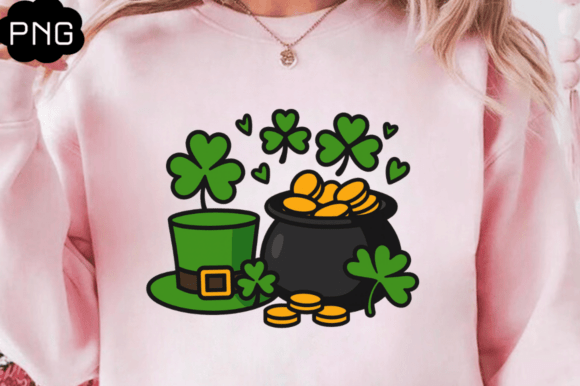
Seasonal design assets play a pivotal role in bridging cultural celebration with creative expression—and few motifs carry the visual immediacy and emotional resonance of Lucky St. Patrick’s Day Clipart PNG, Lucky. Unlike generic holiday graphics, this specialized digital artwork merges symbolic tradition (shamrocks, leprechaun hats, rainbows, four-leaf clovers) with technical precision: high-resolution raster files featuring transparent backgrounds, optimized for sublimation, heat transfer vinyl (HTV), and digital layering workflows. Its utility extends far beyond March 17th—it functions as a modular, scalable component within broader creative ecosystems spanning education, small business production, DIY crafting, and classroom instruction.
Why Technical Specifications Matter More Than Aesthetic Alone
At first glance, “Lucky St. Patrick’s Day Clipart PNG, Lucky” may appear interchangeable with other festive clipart. What distinguishes it is its intentional technical architecture. Each PNG file is delivered at 300 DPI or higher—ensuring crisp output even when scaled to full-front apparel prints or large-format signage. The transparent background isn’t merely aesthetic convenience; it enables non-destructive compositing in Adobe Photoshop, Illustrator, Cricut Design Space, and Silhouette Studio. This means designers can overlay clover motifs onto textured fabric simulations, blend gold coin elements into gradient mug wraps, or isolate individual components (e.g., a single shamrock stem) for custom sticker sheets—without manual masking or background removal.
Compatibility isn’t assumed—it’s verified. Files render correctly across RIP (Raster Image Processing) software used in commercial sublimation printers, maintain alpha-channel integrity when imported into vector-based cutting machines, and retain anti-aliased edges during raster-to-vector conversion. That reliability reduces trial-and-error cycles for educators printing classroom decorations, makers testing HTV adhesion on polyester blends, or Etsy sellers preparing mockups for seasonal listings.
Hobbyists and DIY Enthusiasts
For home crafters, Lucky St. Patrick’s Day Clipart PNG, Lucky serves as a foundational element in layered projects. A single download set might include variations: a minimalist three-leaf clover silhouette for iron-on transfers, a detailed leprechaun boot icon with shadowing for tumbler sublimation, and a scatter pattern of gold coins optimized for scrapbook paper printing. Users report success applying these to cotton tees using standard inkjet-printed HTV, achieving wash-fast results after proper pressure/time calibration. Others combine multiple PNGs into cohesive greeting cards—stacking a rainbow gradient beneath a transparent “Luck of the Irish” script, then adding subtle glitter texture overlays in post-processing.
Educators and Curriculum Developers
In elementary classrooms, these files support cross-disciplinary learning. Teachers embed clover illustrations into editable Google Slides for plant biology units (comparing leaf morphology), use segmented rainbow graphics to teach color theory in art class, or import SVG-ready versions (often included in multi-format bundles) into Tinkercad for 3D-printed St. Patrick’s Day manipulatives. Because the assets are royalty-free for educational use, schools avoid copyright concerns when projecting images during lessons or compiling student-made digital yearbooks featuring themed borders and icons.
Small Business Owners and Print-on-Demand Sellers
Commercial viability hinges on speed, consistency, and scalability—all addressed by this clipart’s structure. A boutique apparel brand launching a limited “Irish Heritage Collection” can apply the same core Lucky St. Patrick’s Day Clipart PNG, Lucky motif across hoodies, ceramic mugs, and tote bags without redesigning for each substrate. Sublimation-specific variants include bleed-safe margins and CMYK-optimized color profiles, reducing color shift on polyester fabrics. One user documented a 40% reduction in prepress time compared to sourcing disparate free graphics—attributing it to unified naming conventions (e.g., “shamrock_gold_300dpi.png”) and standardized dimensions across the set.
Workflow Integration: From Concept to Physical Output
Successful implementation depends less on owning premium software and more on understanding how Lucky St. Patrick’s Day Clipart PNG, Lucky fits into existing pipelines:
- Cricut/Silhouette Users: Import PNGs directly into Design Space or Studio; use “Print Then Cut” for precise HTV placement or “Cut Image” mode for intricate stencil work. Adjust “cut settings” based on material thickness—not graphic complexity—since clean edges are baked into the source file.
- Sublimation Practitioners: Align graphics within your printer’s safe zone (typically 0.125”–0.25” margin); avoid resizing beyond 110% to preserve pixel integrity. For curved surfaces like tumblers, apply slight warp distortion in Photoshop pre-print to compensate for substrate stretch.
- Graphic Designers: Use layer blending modes (e.g., Multiply for gold elements over dark backgrounds) instead of solid fills. Leverage clipping masks to confine patterns to custom shapes—ideal for creating Irish-themed monograms or circular badge designs.
This interoperability eliminates common bottlenecks: no need to trace low-res JPGs, reconstruct missing transparency, or reformat for differing DPI requirements across product lines.
Strategic Considerations for Long-Term Value
While instant download convenience is obvious, sustainable use requires attention to licensing scope and asset longevity. The included commercial license permits resale of physical products bearing the design—but prohibits redistribution of the PNG files themselves or claiming authorship. Savvy users treat the download as a “base kit,” augmenting it with original typography, custom color palettes (e.g., muted sage and cream instead of traditional green/gold), or hand-drawn embellishments to differentiate offerings in saturated markets.
Resolution future-proofs projects: a 6000×6000px file accommodates not just current needs (standard t-shirts, 12oz mugs) but emerging formats like wide-format wall decals or AR-enabled greeting cards where high-fidelity rendering impacts user engagement. Observational data from design forums shows creators who archive these files by theme—and tag metadata with keywords like “sublimation-ready” or “HTV-cuttable”—report faster retrieval and reuse rates across multiple seasonal campaigns.
Contextual Relevance Beyond the Holiday Calendar
The enduring appeal of Lucky St. Patrick’s Day Clipart PNG, Lucky lies in its adaptability to non-literal interpretations. Therapists incorporate clover imagery into cognitive behavioral worksheets representing “four pillars of resilience.” Community garden coordinators repurpose the same rainbow graphic as a soil pH indicator legend (violet = acidic, red = neutral, yellow = alkaline). Even tech startups building wellness apps have licensed simplified versions for loading animations—leveraging the universal association of green with growth and renewal.
This semantic flexibility reflects broader design trends: moving away from rigid holiday tropes toward modular, meaning-rich components that resonate across contexts. It’s why educators in Australia use these files for autumn harvest festivals (rebranding “luck” as “abundance”), and why Canadian craft cooperatives integrate them into Indigenous-led reconciliation initiatives—pairing traditional Ojibwe floral motifs with transparent-layered clovers to symbolize shared values of land stewardship and intergenerational hope.
Conclusion: Design as Cultural Continuity
Ultimately, Lucky St. Patrick’s Day Clipart PNG, Lucky transcends its functional description. It represents a convergence of heritage literacy, technical rigor, and inclusive creativity. Its value isn’t measured solely in download speed or pixel count—but in how seamlessly it enables a teacher to explain botany through a shamrock, a maker to launch a micro-business rooted in family tradition, or a designer to reinterpret symbolism for contemporary audiences. When tools align this precisely with human intention, they cease to be mere assets—and become quiet catalysts for connection, learning, and joyful making.