Dog Mom SVG, Valentines Day SVG, and Mom SVG — Digital Designs for Meaningful, Repeatable Creative Work
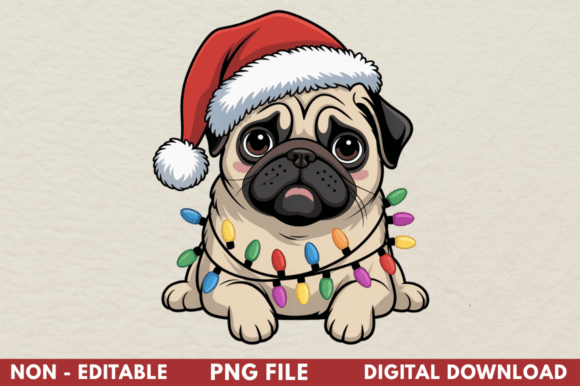
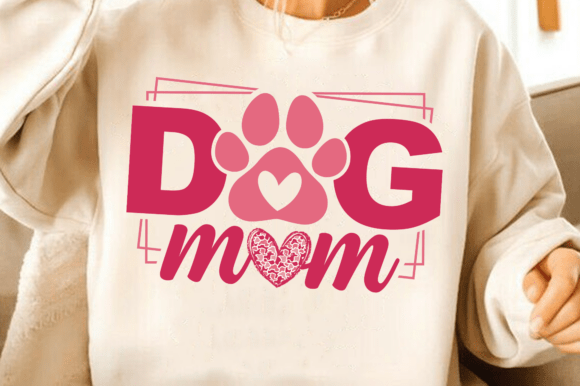
These aren’t just decorative files. A Dog Mom SVG, Valentines Day SVG, and Mom SVG are precision-crafted digital assets designed to slot into real creative workflows — whether you’re launching a small batch of personalized gifts, building a seasonal product line, or supporting a client’s branding project. They’re part of a broader shift toward modular, reusable design components that reduce redundant work without sacrificing emotional resonance or personalization.
Each SVG serves a distinct role in the planning-to-production pipeline. The Dog Mom SVG supports identity-driven merchandise — think apparel, mugs, or social media graphics for pet-loving audiences. The Valentines Day SVG fits into time-bound campaigns: early February product launches, email headers, printable cards, or limited-run stickers. The Mom SVG anchors broader family-themed offerings — Mother’s Day bundles, classroom appreciation kits, or subscription box inserts. Together, they form a cohesive, scalable toolkit rather than isolated one-offs.
How These Files Integrate Into Your Existing Workflow
You don’t need to overhaul your process to use them effectively. Start by identifying where friction currently exists: Are you manually resizing logos for different substrates? Rebuilding text layouts for each new t-shirt color? Struggling to maintain consistency across print and digital formats? That’s where these files add measurable value.
For example, if you run a small Etsy shop selling handmade tote bags, you likely already have a standard production checklist: source blank bags → prep design → cut/heat press → quality check → ship. Adding a Dog Mom SVG means the “prep design” step shrinks from 20 minutes (resizing, adjusting stroke weight, converting fonts) to under two — because the file arrives pre-optimized with clean paths, grouped layers, and no embedded raster elements.
Similarly, educators preparing Valentine’s Day classroom materials can drop the Valentines Day SVG directly into Canva or Silhouette Studio, resize it for name tags or cupcake toppers, and export at 300dpi for crisp printing — all without touching vector editing software. No learning curve. No trial-and-error with scaling artifacts.
Compatibility Isn’t Just About Software — It’s About Continuity
The ZIP includes SVG, DXF, PNG (300dpi), and EPS — not as redundancy, but as intentional format coverage. SVG works natively in Cricut Design Space and most web-based editors. DXF ensures compatibility with older Silhouette versions and some industrial plotters. PNG gives pixel-perfect clarity for sublimation or direct-to-garment printing when vector isn’t required. EPS remains a reliable fallback for Adobe Illustrator users who need editable curves and CMYK support.
This multi-format structure reduces dependency on a single platform. If your primary cutter breaks down, you can still use the PNG in a heat press workflow. If your client requests a layered AI file for brand alignment, the EPS delivers it — no re-tracing needed. That flexibility supports continuity across devices, team members, and project phases.
Practical Implementation Tips You’ll Actually Use
- Organize by use case, not file type. Create folders like “T-Shirt Ready”, “Print-Only”, or “Social Media”, then copy relevant files into each. This saves seconds per project — which adds up to hours over dozens of designs.
- Test color rendering before bulk production. Because screen calibration and printer profiles vary, always run a test print or vinyl sample using your actual output device. The note about slight color variation isn’t a disclaimer — it’s an invitation to calibrate your own pipeline.
- Preserve layer names when editing. These files come with logical grouping (e.g., “Outline”, “Fill”, “Text”). Renaming or flattening layers mid-process may break cut order in Cricut or alignment in multi-pass prints.
- Use the PNG only when necessary. While convenient, raster files lose fidelity when scaled beyond original dimensions. Reserve PNG for fixed-size applications like Instagram story templates or PDF handouts — not for cutting or large-format prints.
Quality Control Starts Before You Click “Download”
The “100 Quality Guaranteed” promise reflects deliberate preparation: paths are simplified (no stray anchor points), text is converted to outlines (so fonts render identically everywhere), and bounding boxes align cleanly — meaning no unexpected cropping in Silhouette Studio or misalignment on Cricut’s preview grid. This isn’t about visual polish alone; it’s about predictable behavior across machines and software versions.
That predictability translates directly into efficiency gains. You spend less time troubleshooting registration marks, less time adjusting kerning after import, and less time explaining to a team member why the “Mom SVG” looks distorted on their machine (it won’t — if used as intended).
Long-Term Use: Beyond the First Project
Think of these files as foundational assets — not disposable downloads. Store them in a dedicated cloud folder with clear naming conventions: DogMom_SVG_Cursive_2024, ValentinesDay_SVG_HeartOutline_2024. Add a simple README.txt noting compatible machines and known limitations (e.g., “Works with Cricut Maker 3 but requires manual weld in Explore Air 2 due to compound path handling”).
Over time, you’ll build a personal library where Dog Mom SVG variants pair with seasonal palettes, Valentines Day SVG elements combine with handwritten font packs, and Mom SVG layouts adapt to new product categories — all without starting from scratch. That’s how scalable creative work begins: not with more tools, but with better-structured, interoperable assets.
Real Integration Examples Across Roles
Freelance designers: Drop the Mom SVG into a client’s Shopify theme as a banner graphic, then repurpose its outline as a watermark for downloadable gift guides — same asset, two contexts, zero redraw time.
Small business owners: Use the Valentines Day SVG to create a limited-time bundle: mug + card + sticker sheet. Export the same vector to both your DTG printer (via PNG) and your Cricut (via SVG) — keeping visual language consistent across physical and digital touchpoints.
Educators: Import the Dog Mom SVG into Google Slides, ungroup elements, and turn the paw print into an interactive drag-and-drop activity for younger students — no additional licensing, no attribution required.
None of this requires technical mastery. It requires knowing what the file *does*, where it fits, and how to preserve its integrity as it moves through your tools and tasks.
Remember: This is a DIGITAL DOWNLOAD — no physical product will be shipped. What you receive is a ready-to-deploy component — lightweight, adaptable, and built for repetition. Your job isn’t to make it work. It’s to decide where it fits next — and trust that it will.